Odoo for Retailers
Manage POS, inventory, eCommerce, purchasing, and finance in one connected system built for modern retail. Improve customer experience, reduce manual work, and scale across stores and channels with confidence.
Buyer judgement
Retail ERP decisions need store, stock and margin discipline
Retail systems only work when store teams, ecommerce, purchasing and finance trust the same operating picture. The important decision is not just whether the software has retail features, but whether stock movements, returns, promotions, transfers and margin checks are clear enough for daily use.
For a retailer, implementation risk usually appears in the gaps between channels. Online orders reserve stock differently from store sales, markdowns change margin expectations, purchase timing affects availability, and managers need reporting that explains exceptions before they become customer issues.
A useful project plan should define who owns product data, price changes, replenishment rules, POS exceptions, stocktakes and finance reconciliation before configuration begins.
- Map store, ecommerce and warehouse stock ownership before rollout.
- Test returns, exchanges, markdowns, gift cards and stock transfers early.
- Use readiness scoring as the first conversion step, with contact only for urgent timing questions.
Retail is fast, messy, and unforgiving. One stock mismatch, one slow checkout, one disconnected system—and you lose the sale.
Odoo brings everything together. From in-store POS to online orders, inventory, purchasing, and finance—your entire retail operation runs on one unified platform. No more patchwork systems. No more manual reconciliation.
This is how modern retailers actually scale—without losing control.
Common Retail Challenges We Help Solve
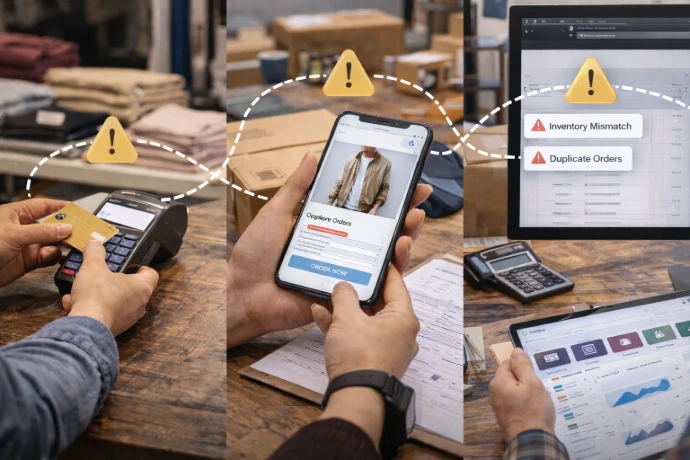
Disconnected sales channels
Your POS, eCommerce, and backend systems don’t talk to each other—creating chaos and bad customer experiences.

Inventory guesswork
Stock levels are inaccurate, leading to overselling, stockouts, and frustrated customers.
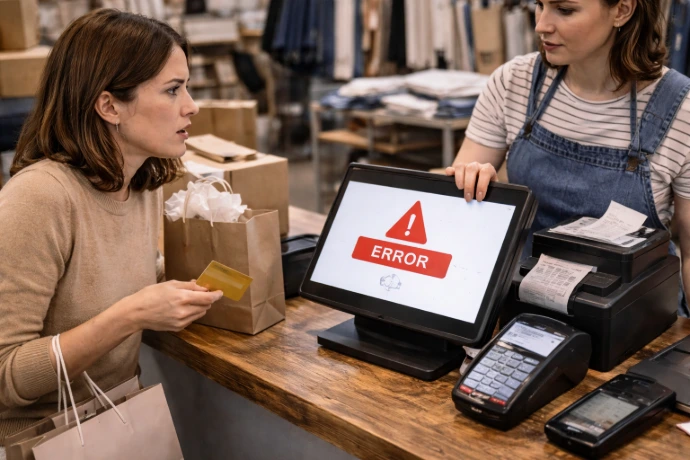
Slow and inconsistent checkout
Outdated POS systems create friction, errors, and lost sales at the worst possible moment.
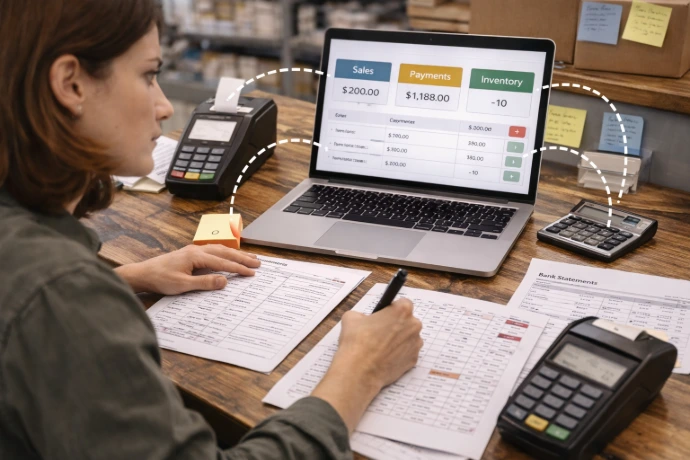
Manual reconciliation
Sales, payments, and inventory updates require constant manual work across systems.
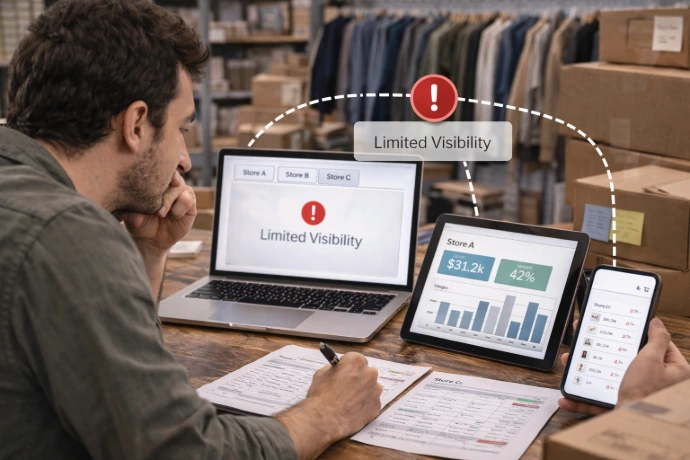
Limited visibility
You don’t have real-time insight into performance, margins, or stock across stores.
What Odoo Improves for Retailers
Unified retail operations
Manage in-store, online, and backend operations from one platform.
Real-time inventory visibility
Track stock across all locations and channels instantly.
Faster checkout experience
Modern POS that works online and offline with seamless payment integration.
Omnichannel selling
Sell across physical stores, eCommerce, and marketplaces with synced data.
Better customer engagement
Build loyalty programs, track purchase history, and personalise marketing.
Data-driven decisions
Access real-time dashboards to track sales, margins, and performance.
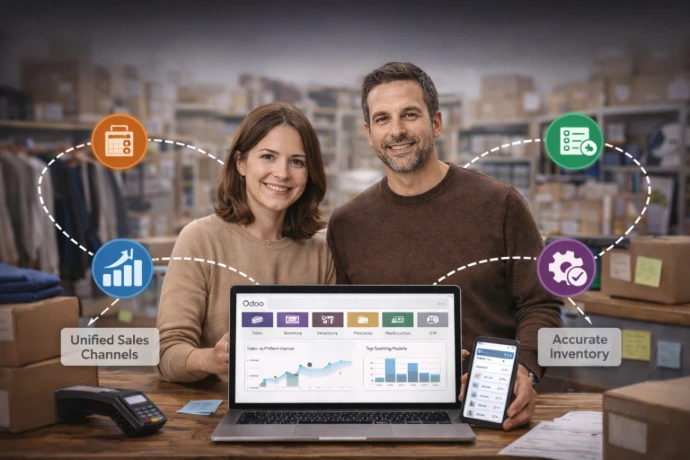
Odoo for retailers with POS, eCommerce and inventory complexity
Use Odoo to connect retail POS, eCommerce, inventory, fulfilment, purchasing, finance and reporting. Syceed helps retailers manage operational complexity rather than relying on disconnected tools and manual checks.
Key Odoo Capabilities for Retail Businesses
Point of Sale (POS)
Fast, intuitive POS with offline capability and real-time sync.
Inventory & Stock Management
Centralised inventory across stores, warehouses, and online channels.
eCommerce Integration
Manage your online store and in-store operations from one system.
Customer & Loyalty Management
Track customer data, run promotions, and improve retention.
Purchasing & Supplier Management
Automate replenishment and manage supplier workflows efficiently.
Accounting & Finance
Real-time financial tracking, reconciliation, and reporting.
Multi-Store Management
Control multiple retail locations with centralised visibility.
Why Work With Syceed
Anyone can install Odoo. Very few can make it actually work for retail.
We don’t just implement software—we design retail systems that match how your business actually operates.
Retail-focused implementation
We understand POS workflows, stock movement, and omnichannel complexity.

Structured, practical approach
No overengineering. No unnecessary modules. Just what works.

Migration without disruption
Move from legacy systems or spreadsheets without breaking operations.

Customised to your workflow
Your pricing, promotions, stores, and processes—built properly into Odoo.
Ongoing support & optimisation
Retail doesn’t stand still. Neither should your system.
Run Retail on One Connected System
If your current setup feels like manual workarounds—it’s time to fix it properly.
Let’s build a retail operation that’s connected, scalable, and actually under control.
Odoo for Retailers Questions
What retail workflows should be mapped first?
Map POS, eCommerce, stock locations, replenishment, product data, pricing, returns, finance and reporting before implementation scope is locked.
When is a lighter review more appropriate?
Use a lighter review when the retail workflow is simple or the team first needs help clarifying priorities.
What creates risk in retail Odoo projects?
Risk usually comes from unclear stock ownership, channel exceptions, weak testing and user adoption gaps.
How should retail success be measured?
Measure stock accuracy, order flow, fewer manual fixes, clearer reporting and smoother daily execution.
What should happen after go-live?
Monitor stock exceptions, user behaviour, reporting quality and channel handoffs so improvements continue.
How does Syceed approach retail Odoo workflows?
Syceed focuses on stock accuracy, POS/eCommerce handoff, fulfilment exceptions and reporting the retail team can use daily.
Useful Next Steps
Multi-warehouse Odoo - Improve stock visibility
Shopify to Odoo migration - Connect retail and eCommerce operations
Odoo implementation - Plan the implementation path
Odoo for retailers
Retail ERP that keeps POS, ecommerce, warehouse and finance in sync
Syceed helps retailers implement Odoo around the daily operating reality: store and online orders, stock availability, purchasing, receiving, returns, fulfilment, finance reconciliation and reporting that teams can trust.
Retail workflows we protect
- Product, variant, barcode and price-list structure across POS, ecommerce and warehouse operations.
- Stock availability, replenishment, receiving and transfer rules that reduce overselling and manual fixes.
- Order, refund, exchange and fulfilment handoffs between stores, ecommerce, shipping and finance.
- Reporting for margin, channel performance, stock movement, slow movers and operational exceptions.
- Training and go-live support so retail teams understand the system before real customers depend on it.
Retailers often need connected work across Odoo implementation, inventory management, Shopify integration, shipping and 3PL workflows, accounting and finance and reporting dashboards.
For planning, review Odoo pricing factors, use the readiness scorecard, or compare operational proof in LatestBuy and Teacher Superstore.
Common retail Odoo questions
What makes retail Odoo projects different?
Retail Odoo projects need tighter control across POS, ecommerce, stock, purchasing, fulfilment, refunds, promotions, finance and reporting because small mismatches quickly affect customers and store teams.
Can Odoo support both stores and ecommerce?
Yes. Odoo can support store, ecommerce and warehouse workflows, but the project needs clear ownership for products, prices, stock, orders, returns and channel exceptions.
What retail data should be reviewed before implementation?
Review products, variants, barcodes, suppliers, stock on hand, locations, price lists, tax rules, customer data, gift cards where relevant, order history and reporting requirements.
How should retailers reduce go-live risk?
Retailers reduce risk through real transaction testing, stocktake planning, POS and ecommerce exception testing, finance reconciliation, staff rehearsal and a practical post-go-live support window.