Buyer judgement
Importer ERP planning must connect landed cost, timing and stock confidence
Importers need more than purchase orders and stock counts. The system has to support inbound timing, supplier reliability, landed cost assumptions, container or shipment visibility and the commercial decisions that depend on stock arriving when expected. If purchasing, warehouse and finance teams read the same situation differently, the rollout will struggle even if the software fields are technically complete.
Implementation risk often appears when delays change availability, landed costs affect margin, and partial receipts create confusing reports unless ownership is defined early. The business needs to know who updates expected dates, who confirms cost changes, when stock can be promised, how short receipts are handled and how finance validates the landed cost story after goods arrive.
A useful implementation plan connects purchasing, receiving, costing, stock availability and reporting before configuration decisions are made. The readiness assessment is the right first step when the goal is to understand this operating model, because it captures the uncertainty that affects scope. Contact can remain a quick secondary route for immediate questions, but it should not replace the structured assessment for implementation planning.
For importer teams, the most valuable project conversations are specific and operational: what happens when a supplier ships short, which costs are estimated versus confirmed, how inbound stock affects customer promises, and how quickly margin reporting catches up after receipts and adjustments. Those decisions need to be clear before automation is trusted.
The extra planning detail matters because these pages are not just informational landing pages. They should help a buyer recognise whether their own operating model is ready to discuss scope, budget and timing with confidence. That means the page should name practical failure modes, not simply promise a cleaner system.
The assessment route also gives Syceed better qualification context than a generic enquiry. It shows whether the visitor is thinking about process ownership, data quality, integration pressure, reporting needs and internal change management. That makes follow-up more useful for both sides.
Contact remains helpful when a visitor has an immediate availability question, procurement deadline or project timing constraint. For most serious implementation conversations, the structured assessment should still be the first CTA because it captures the substance needed to judge fit and next steps.
The stronger conversion path is therefore consultative rather than pushy. It gives the buyer a reason to share operational context, while still leaving a fast route for people who already know they need a direct conversation.
- Map supplier, inbound shipment, landed cost and receipt ownership.
- Test delayed, partial and cost-adjusted receipts before rollout.
- Make readiness assessment the primary CTA and contact the quicker secondary option.
&c2=rgba(0,0,0,.5)&c4=o-color-4&c5=o-color-5)
Odoo ERP for Importers
&c4=o-color-4&c5=o-color-5)
Run Import Operations on One Connected Platform
&c4=o-color-4&c5=o-color-5)
For Importers Who Need More Than Basic Inventory
Importers juggle suppliers, lead times, landed costs, stock availability, forecasting and margin pressure.
Odoo helps importers connect these workflows inside one ERP system. Odoo can replace spreadsheet-heavy handoffs with clearer procurement, inventory, sales and finance workflows. That means fewer blind spots, fewer manual handoffs, and a much tighter grip on cash flow and stock decisions.
At Syceed, we help businesses implement Odoo in a way that actually reflects how they operate. Syceed focuses on Odoo implementation, migration, integrations and warehouse workflows.
Common Importer Challenges We Help Solve
1. Landed costs are hard to track accurately
Freight, duties, customs, insurance, and handling charges can destroy margin visibility when they are not allocated properly.
2. Stock planning is reactive
Long lead times make poor forecasting expensive. Overstock ties up cash. Understock kills sales and creates customer headaches.
3. Supplier and purchase workflows are fragmented
Emails, spreadsheets, PDFs, and shared drives turn purchasing into detective work instead of process.
4. Warehouse teams lack real-time visibility
Inbound stock, internal transfers, container arrivals, and received quantities often live in different places and never quite agree.
5. Finance gets data too late
When purchasing, inventory, and accounting are disconnected, reporting lags behind reality and decision-making gets fuzzy.
6. Growth creates operational drag
What worked with a smaller product range or fewer suppliers starts to crack once volume, warehouses, and complexity increase.
Centralised purchasing control
Manage supplier orders, approvals, lead times, and order status from one system.
Better landed cost visibility
Allocate shipping and import-related costs more accurately so margins are not built on fiction.
Stronger inventory accuracy
Track incoming stock, warehouse movements, and product availability with more confidence.
Faster inbound operations
Coordinate receipts, transfers, and replenishment without relying on spreadsheet gymnastics.
Clearer financial reporting
Connect purchasing, inventory, and accounting so finance sees what is really happening.
More scalable operations
Build workflows that can handle more SKUs, more suppliers, more warehouses, and more volume without operational chaos.
What Odoo Improves for Importers
Key Odoo Capabilities for Import Businesses
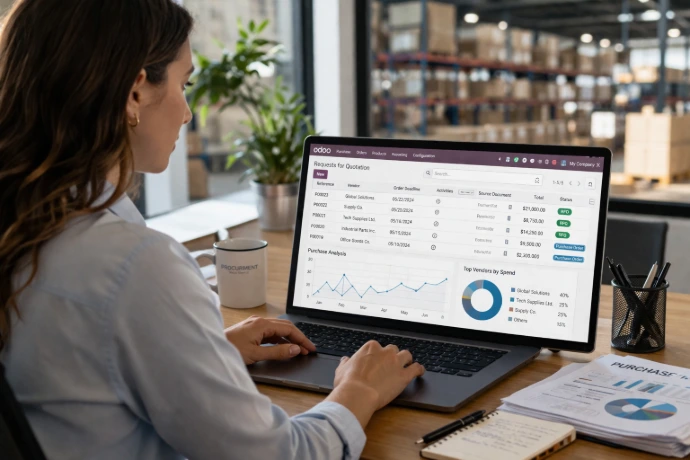
Purchase Management
Create and manage supplier purchase orders, approval flows, vendor records, lead times, and replenishment logic.
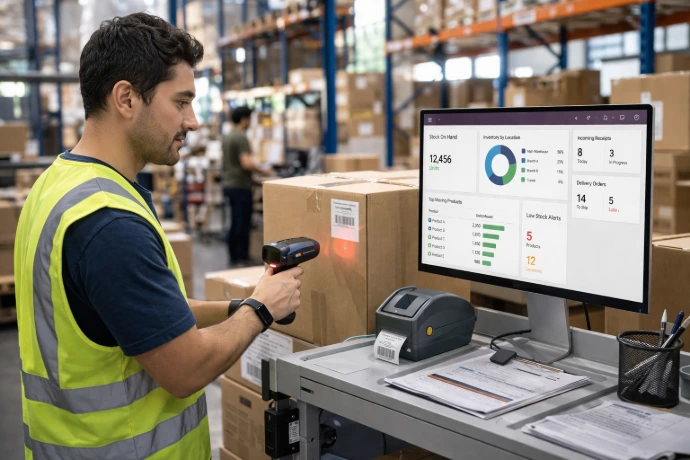
Inventory & Warehouse Management
Track stock across locations, manage incoming shipments, internal transfers, putaway logic, and replenishment workflows.

Landed Costs
Assign freight, duties, shipping, and related import charges across products to improve cost accuracy and margin reporting.
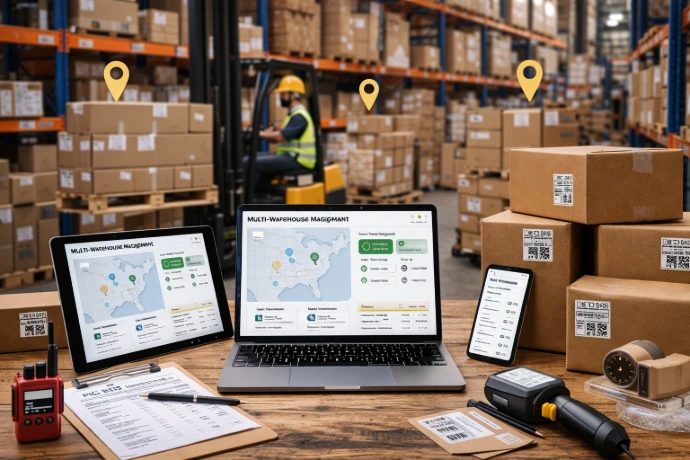
Multi-Warehouse Visibility
View stock across warehouses and locations in one connected environment, especially useful for growing import operations.
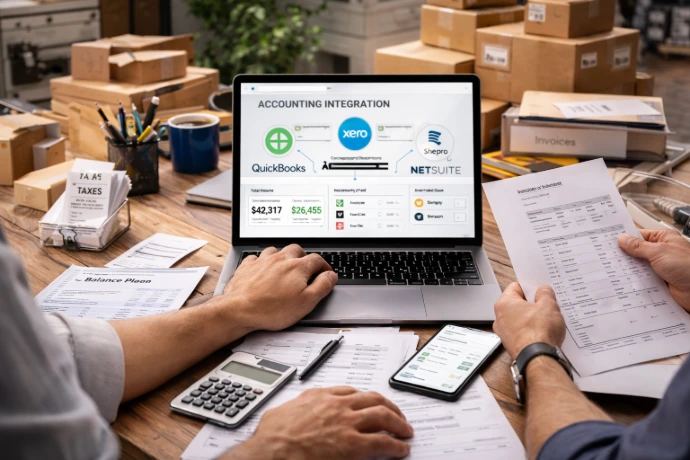
Accounting Integration
Link purchasing and stock valuation with finance so the numbers stop arriving three business days late and emotionally damaged.

Reporting & Dashboards
Get clearer visibility into purchasing trends, stock levels, supplier performance, product movement, and operational bottlenecks.
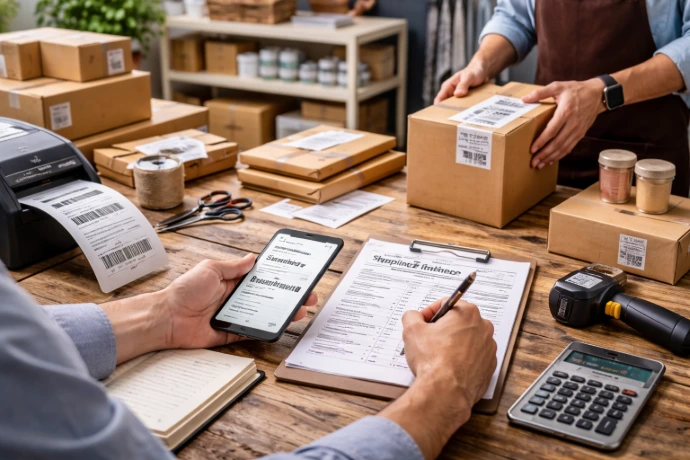
Sales & Customer Fulfilment
Connect inventory availability with sales workflows to reduce overpromising and improve fulfilment coordination.
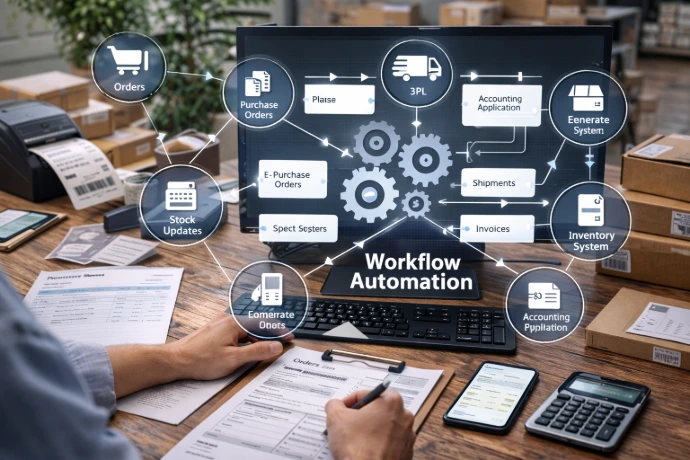
Workflow Automation
Reduce manual admin with automated triggers, document flows, and status updates across teams.
Why Odoo Works Well for Importers
Importers do not just need inventory software. They need connected operational control. Odoo connects purchasing, stock, warehousing, accounting and reporting so teams can reduce delays and manual admin.
It is also flexible enough to support different importer models. Some businesses import in bulk and distribute locally. Others combine importing with wholesale, ecommerce, or project-based fulfilment. Odoo gives you a core platform that can be configured around your workflow instead of forcing your business into rigid software logic.
Why Work With Syceed
Choosing the platform is only half the game. The real leverage comes from implementing it properly.
Syceed is positioned as a Certified Odoo 18 Partner offering implementation, migration, integration, customisation, workflow automation, support, and optimisation services. This is relevant for importers with warehouse, eCommerce or legacy-system complexity.
How We Help Importers Implement Odoo

1. Discovery
We map your purchasing, inbound logistics, warehouse, inventory, and finance workflows.
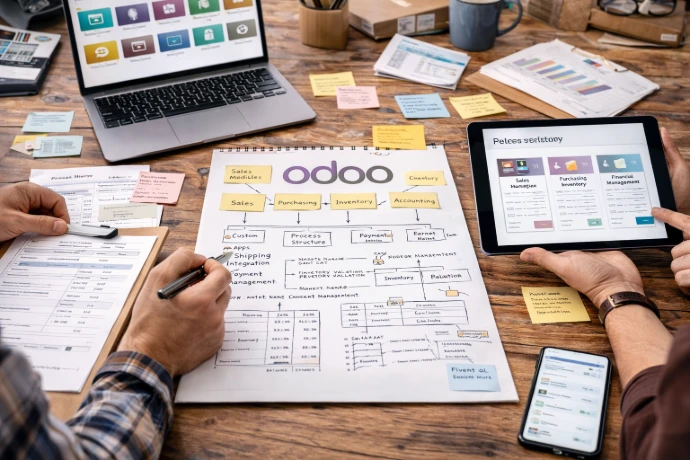
2. Solution design
We define the Odoo setup, modules, process structure, and reporting requirements.
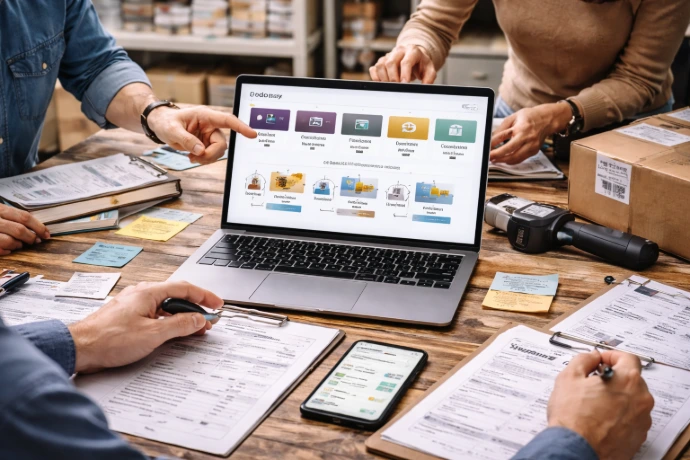
3. Implementation
We configure the platform around your business, not around a generic demo environment pretending to understand containers.
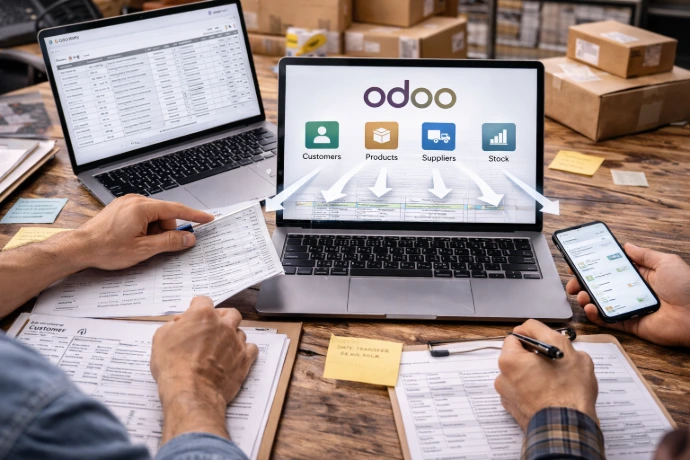
4. Data migration
We move your key records, products, suppliers, stock, and operational data into Odoo cleanly.
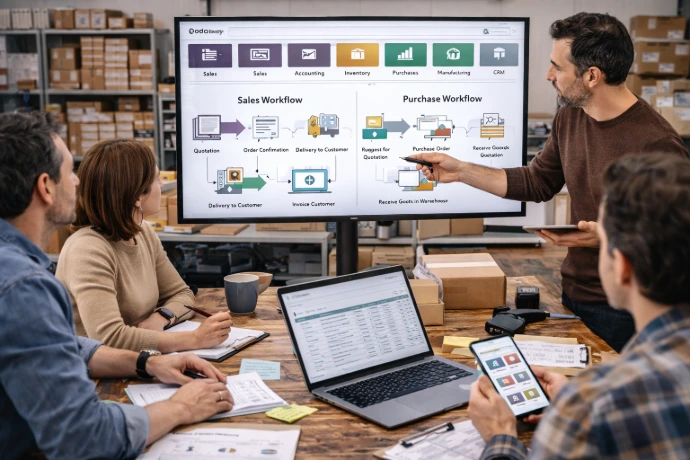
5. Training and go-live
We train your team, test the workflows, and support a smoother rollout.
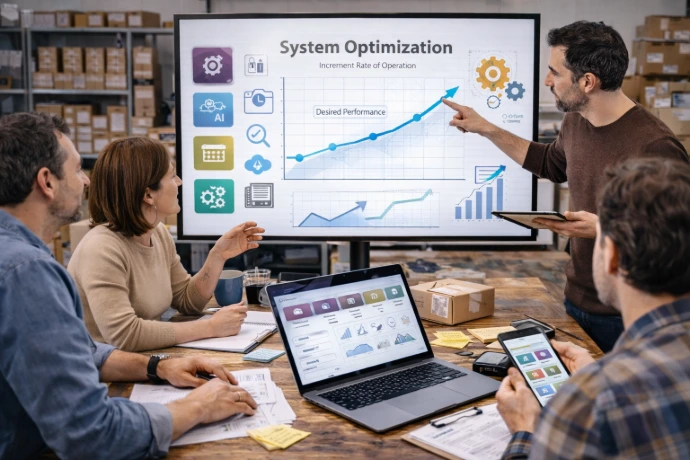
6. Ongoing optimisation
We refine the system as your import operation grows and your requirements evolve.
Let’s Build a Better Import Operation with Odoo
If importing workflows rely on spreadsheets and team memory, it is time to clean up the model. Odoo can help you gain better control over purchasing, landed costs, stock, and reporting, and Syceed can help you implement it properly.
Odoo for importers managing landed costs and inbound stock
Use Odoo to manage supplier orders, inbound shipments, landed costs, stock receipts, purchasing approvals, warehouse visibility and finance reconciliation. Syceed helps importers reduce manual work and improve control from order to stock availability.
Frequently Asked Questions
Here are some common questions about our company.
Yes. Odoo can support landed cost allocation so import-related expenses such as freight, duties, and shipping can be distributed more accurately across inventory.
Yes. Odoo is well suited to multi-warehouse operations, with visibility across stock locations, transfers, receipts, and fulfilment workflows.
Yes. One of Odoo’s main advantages is that it connects these functions inside one system, which improves reporting and reduces manual reconciliation.
Based on Syceed’s service positioning, yes. Syceed offers implementation, customisation, workflow automation, migration, and ongoing optimisation services.
No. Odoo can work for growing import businesses as well as more established operations, especially where manual processes are already creating friction.
Better visibility, tighter purchasing control, improved stock accuracy, clearer landed cost reporting, and a more scalable operating model.
Odoo for Importers Questions
What importer workflows should be mapped first?
Map supplier orders, inbound shipments, landed costs, stock receipts, purchasing approvals, warehouse visibility and finance reconciliation.
When is a lighter review more appropriate?
Use a lighter review when the import workflow is narrow or ownership still needs clarifying.
What creates risk in importer Odoo projects?
Risk usually comes from unclear inbound processes, data gaps, finance mapping issues and limited testing.
How should importer success be measured?
Measure inbound visibility, stock reliability, fewer spreadsheet workarounds and cleaner reporting.
What should happen after go-live?
Monitor inbound exceptions, stock accuracy, reporting quality and team adoption after launch.
How does Syceed approach importer workflows?
Syceed focuses on purchasing, inbound timing, landed-cost context, stock control and finance visibility.
Useful Next Steps
Multi-warehouse Odoo - Control inbound and warehouse stock
Odoo integrations - Connect finance and fulfilment
Odoo implementation - Plan importer workflows