See If Your Business Is Ready for Odoo
The Odoo Readiness Scorecard helps you assess how prepared your business is for implementation across systems, processes, data, integrations, reporting, and internal ownership. Get a clearer view of what is working, what is missing, and what needs attention before rollout begins.
Implementing Odoo without understanding your operational readiness is where projects start getting messy. Teams jump in with good intentions, then run into unclear workflows, dirty data, disconnected systems, internal bottlenecks, and competing expectations halfway through delivery.
The Odoo Readiness Scorecard gives you a more structured starting point. It helps you evaluate whether your business is ready to move, where the major friction points are, and what needs to be cleaned up before implementation. That means fewer surprises, better planning, and a stronger rollout strategy.
Why Use an Odoo Readiness Scorecard
Many businesses know their systems are holding them back. Far fewer know if they are truly ready to fix them properly. This scorecard helps assess the foundations before implementation begins, so you can reduce rework, avoid confusion, and improve implementation outcomes.

What the Scorecard Assesses

1. Process Clarity
Do your teams follow defined workflows, or rely too much on workarounds and spreadsheet folklore?

2. System Landscape
How connected your tools are, and where duplication or manual work is creating drag.
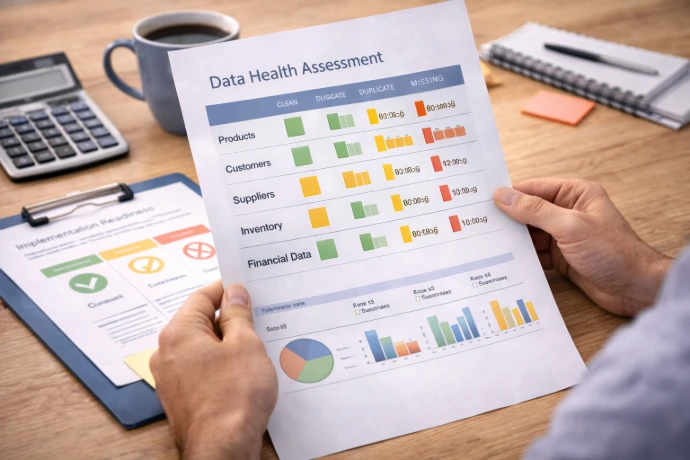
3. Data Readiness
How clean your core data is before migration becomes a cleanup project.
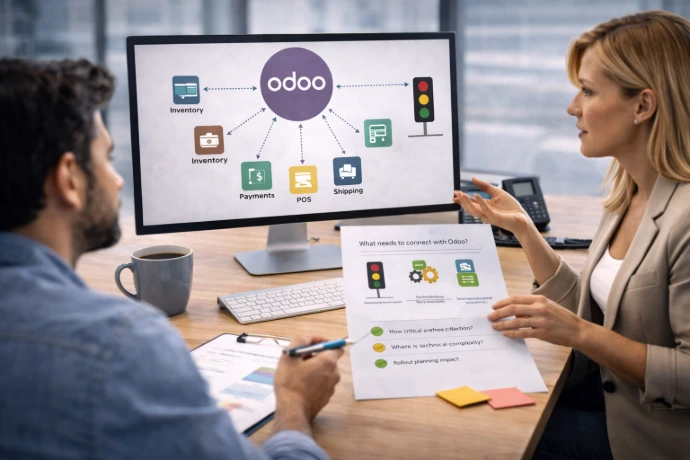
4. Integration Requirements
What needs to connect with Odoo, how critical those connections are, and where technical complexity may affect rollout planning.

5. Reporting and Visibility
Whether reporting supports decisions or forces teams to piece things together manually each week.

6. Team and Change Readiness
Whether the business has the ownership and buy-in needed for a successful implementation.
Readiness Fit
Considering Odoo for the first time
It is especially useful for operations leaders, founders, finance teams, eCommerce managers, and businesses that know the current setup is no longer fit for scal
Once completed, the scorecard helps you understand:
Your overall readiness level
Where the main implementation risks sit
Which operational areas need work before rollout
How complex your likely implementation path may be
What to prioritise first for a smoother Odoo project
This gives the team a more practical basis for planning next steps instead of making ERP decisions from incomplete information.
Readiness is not just about software. It is about whether your business has the structure, clarity, and operational alignment needed to implement well.
Syceed helps businesses approach Odoo in a more practical way. That means understanding how your workflows actually run, identifying where the real bottlenecks are, and shaping an implementation plan around operational reality instead of generic ERP theatre.
We focus on giving businesses clearer visibility, smarter systems, and a more controlled path to rollout.
Start Your Odoo Readiness Check
New to Odoo? Read what Odoo is, how pricing works and why official partner support matters.
Odoo readiness assessment before implementation scope is locked
Use the readiness assessment before implementation scope is locked. It helps surface risks around data, workflows, integrations, reporting, users, ownership and go-live preparation while there is still time to make better decisions.
Odoo Readiness Questions to Resolve Before You Start
A readiness scorecard is useful when the business knows change is needed but still needs a clearer view of data, workflow, system and ownership risk.
What does Odoo readiness mean?
Readiness means the business has enough clarity around workflows, data, reporting, integrations, ownership and decision-making to start implementation without avoidable confusion.
Who should complete the scorecard?
Operations, finance, eCommerce, warehouse and leadership stakeholders should contribute because ERP readiness depends on how work actually happens across the business.
What risks does the scorecard help identify?
It can identify unclear workflows, weak data ownership, disconnected tools, reporting gaps, integration complexity, internal bottlenecks and change-management risks.
Is a low readiness score a reason not to use Odoo?
Not necessarily. A low score often means the business should clean up data, clarify ownership or stage the project before committing to a broader rollout.
How does the scorecard support implementation planning?
It helps prioritise discovery, migration preparation, process design, integration review and training needs before configuration decisions are locked in.
What should happen after completing the scorecard?
The output should inform a readiness review, implementation scope, risk priorities and the first practical steps needed before go-live planning.
Useful Next Steps
- Odoo implementation - turn readiness findings into an implementation path
- Odoo migration - prepare data and cutover planning
- Odoo support - stabilise existing Odoo environments
- Odoo implementation assessment - book an implementation discussion